Gender in climate negotiations: history, disputes, and the Belém Plan
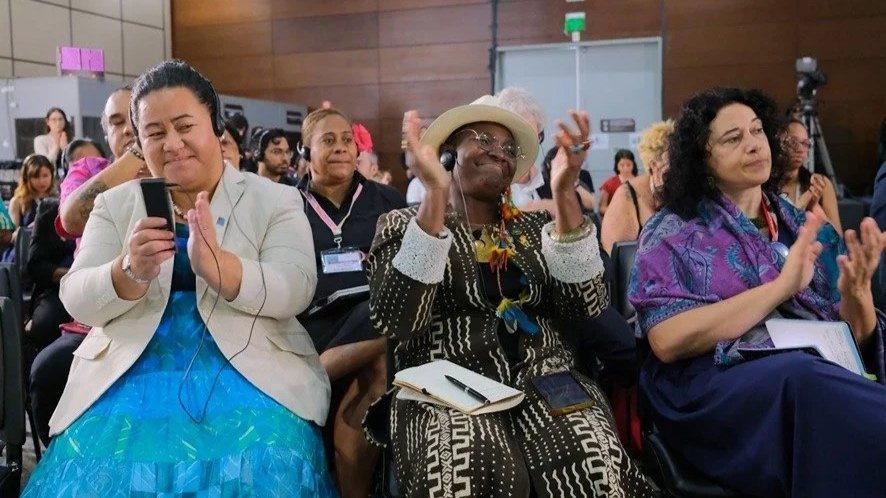
High-level dialogue on gender at COP 30 – Towards people-centered climate action: recognizing the role of women and girls of African descent (Photo credit: © UN Climate Change – Diego Herculano).
By Maïra de Roussan, Researcher at EmpoderaClima
Between November 10 and 21, during COP30 in Belém, Brazil, a central disagreement over the definition of the term gender stalled negotiations on the new Gender Action Plan (GAP). More conservative countries, such as Iran, Russia, and Argentina, called for a version based on a binary biological gender, classified as male or female, without mention of social roles and structural inequalities between men and women. The term is seen as controversial due to its multiple interpretations, influenced by different traditions, religions, and gender identities, which ends up creating opposing camps that find it difficult to engage in dialogue without conflict. Gender ends up falling into the realm of concepts that many call politically charged. The language, therefore, is historically vague in global climate negotiations, in order to maintain consensus and avoid disputes that would prevent the implementation of gender plans at the international level.
Gender in multilateralism
Since the implementation of the United Nations in the post-war period, women have been included in negotiation texts between countries, guaranteeing them the same status as men. The 1948 Universal Declaration of Human Rights establishes the principle of equal rights, without distinction of sex, but without mention of gender. At that time, the focus was basic: to ensure that women could vote, be elected, and participate in public life, without considering social and cultural norms as major causes of gender inequalities. It was only in 1979, with the introduction of the Convention on the Elimination of All Forms of Discrimination against Women (CEDAW), that the idea of systemic structures of inequality between men and women came into play, promoting the view that, in order to guarantee women's rights, we must also recognize and change the systems that produce such inequalities.
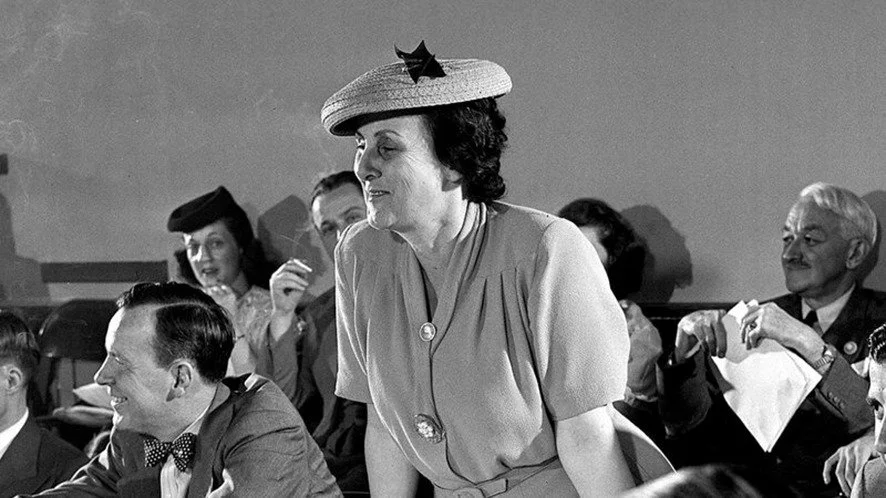
Bertha Lutz, Brazilian delegate in San Francisco (1945), was instrumental in including equality between men and women in the UN Charter. Her legacy goes beyond diplomacy, combining pioneering scientific research and a vision of sustainable development even before the term existed (Photo credit: © UN Archive).
The major paradigm shift only came about in 1995 with the Beijing Platform, which still defines gender within the UN today. Beijing treated gender not as "men and women," but as a social system of roles, norms, and relationships that organizes people's lives, shapes opportunities, defines who cares, who leads, who decides, and who is most vulnerable. It was also on this occasion that the concept of gender mainstreaming emerged, establishing that gender should not be treated as something separate, but should permeate all international policies as a mandatory lens.
Gender in climate diplomacy
In the field of climate negotiations, gender was first mentioned at COP7 in 2001 in Morocco, which promoted the participation of more women in decision-making spaces. In 2010, the Cancún Agreements at COP16 included the first serious references to gender perspective and differentiated vulnerability. The big shift came in 2014 with the Lima Program, which opened the door to the formal integration of gender into the UNFCCC (United Nations Framework Convention on Climate Change), and from that, in 2017, the first Gender Action Plan (GAP) was created, which established clear goals and reinforced the need for training, guidelines, and the effective participation of women so that all climate policies would integrate the gender perspective.
At the beginning of COP30, 92 countries signed a declaration entitled Global Declaration on Gender Equality and Climate Action, calling for the adoption of a new Gender Action Plan that was more ambitious and intersectional.
Despite important advances, the term "gender" has been questioned by different parties in climate negotiations in recent years, with many of them demanding a clear definition that indicates that "gender" refers only to "women and men." This is a tactic to restrict the scope of the Work Plan, avoiding mention of social roles, intersectionalities, and other aspects of gender identity. Russia, for example, opposes the term because it has connotations with the LGBTQIA+ community, which is persecuted and criminalized in its territory. This year, Argentina highlighted the need to include a footnote in the negotiation text, indicating that, for the country, gender is defined according to Article 7.3 of the Rome Statute of the International Criminal Court, which establishes a binary definition of only two biological sexes: female and male. Other countries, including Iran, Saudi Arabia, and Paraguay, also suggested footnotes expressing their binary views of gender.
On the other hand, in response to attempts to limit gender language, parties (UNFCCC signatory countries that officially participate in international negotiations) such as the European Union, the Independent Association of Latin America and the Caribbean (AILAC), Norway, the United Kingdom, Canada, the Alliance of Small Island States (AOSIS), and the Environmental Integrity Group (EIG) were expressly opposed to the addition of footnotes. This practice was considered dangerous, as it could set a precedent in which different parties would indicate their own definitions of key concepts, rather than following the language adopted and accepted by the parties since the Beijing Platform: open, flexible, and "sufficient" to analyze complex vulnerabilities. This semantic clash ended up stalling decisions, delaying GAP revisions, and hindering consensus, even in technical areas. Instead of expanding the agenda, the effort was simply to avoid setbacks. And so it was that the gender agenda, which took decades to gain ground in the climate regime, once again became one of the most politicized and sensitive chapters of the COPs.
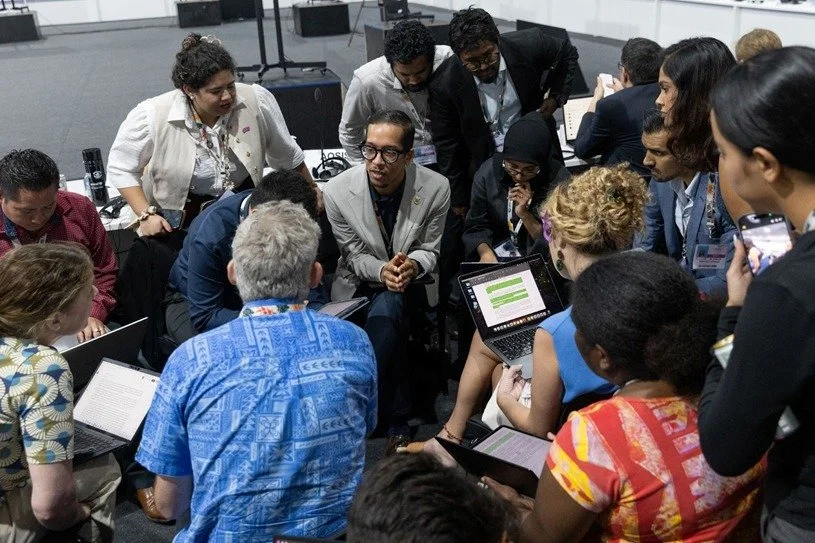
Negotiations taking place during the day at COP30 (Photo credit: © UN Climate Change - Kiara Worth).
COP30 was no different: decisions remained stalled for days, with the Presidency defining Chile and Sweden, at the end of the first week of the conference, as the countries responsible for coordinating with the parties to ensure consensus for the finalization of the text. The effort was successful, with the adoption of the Belém Gender Action Plan (2026-2035), which establishes initiatives and actions for the next nine years. The footnotes were not included in the final text, which maintained a more comprehensive language in terms of gender, a victory after days of deadlock.
The Plan reinforces the need for gender-sensitive climate policies, with five main areas, including: training, participation, institutional coherence, implementation, finance, technology, and monitoring. The actions described include expanding women's participation and leadership, strengthening initiatives at the national level, and including data disaggregated by gender and age. The plan also marks an important step forward by explicitly including women of African descent, recognizing their leadership role in climate action. This unprecedented reference, highlighted by the Geledés Institute as a "historic and important" milestone, is the result of the active role played by the institute and Brazilian civil society in the discussions, strengthening the construction of an intersectional approach within the UNFCCC. Finally, the new GAP will undergo a further review in 2029 to ensure its effectiveness and monitoring.
According to the UNFCCC Women and Gender Constituency (WGC), the strength of the Belém Gender Action Plan will depend on how it is carried out. For the Constituency, the document is the result of years of collective work and now becomes a central pillar of the next decade of feminist climate advocacy. Despite the adoption of the new plan, it is an instrument that needs to be continuously defended, financed, and strengthened in order for its true potential to be realized.
The EmpoderaClima team was present in Belém at COP30 and was able to closely follow the negotiation process for the new Gender Action Plan, observing both the advances and the obstacles that marked the discussions. This participation, even if indirect, allowed us to witness the complexity of the process and reinforced the importance of maintaining active and continuous vigilance to ensure that the plan is implemented ambitiously with a gender-transformative approach. We will continue together!
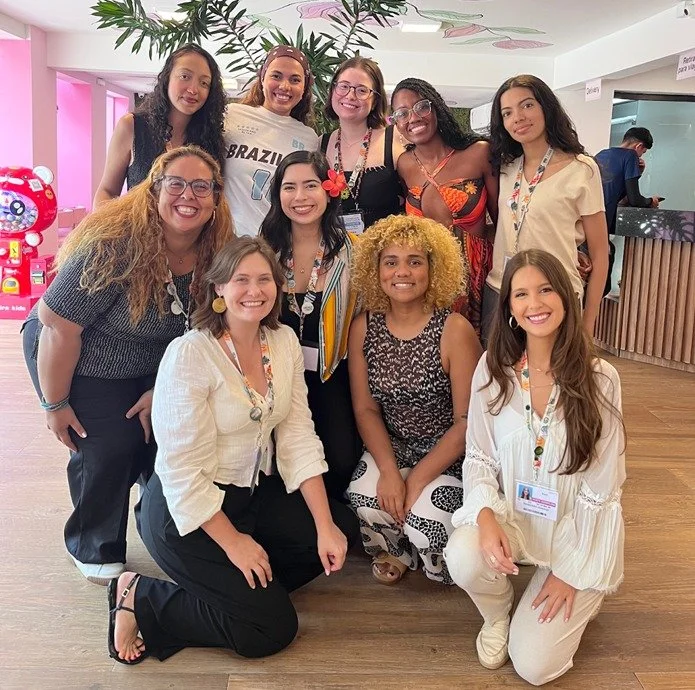
Photo: EmpoderaClima team at COP30 in Belém