Written by Luiza Vieira Caleia, Researcher at EmpoderaClima.
On February 24, 2026, the Juiz de Fora weather station recorded its heaviest rainfall: 138.8 mm. The average rainfall for the month of February is 184.8 mm; therefore, in just one day, it rained about 75% of what is expected for the entire month. The cumulative rainfall for that month made February 2026 the rainiest month in the city’s history, with 752.4 mm recorded.
These figures help illustrate the scale of the tragedy. According to the Juiz de Fora City Government, as of March 1, there were 61 deaths, 8,584 people left homeless or displaced, and 2,936 incidents reported by Civil Defense. It was the largest environmental disaster ever recorded in the city. For those who live in Juiz de Fora, however, these numbers are more than just statistics.
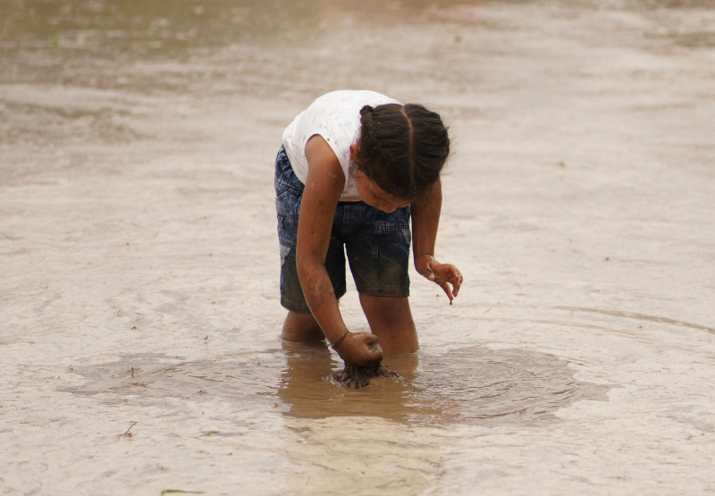
As a resident of the city, experiencing all of this was traumatic. When I opened the map of high-risk areas, I identified places where my schoolmates were and spent the night sending messages to check if they were safe. In the days that followed, I was out on the streets supporting the community by distributing essential supplies for the post-disaster period. One of the moments that left the deepest impression on me was when, while volunteering at a shelter, I decided to play with the children. It was deeply moving to realize how many of them still couldn’t grasp what had happened. Little by little, I came to understand the scale of the tragedy and just how especially hard it had been on the children.
Dinesh Lens
The impact was not limited to the loss of homes and belongings. The Paineiras neighborhood, located below Morro do Cristo, experienced a mudslide carrying large boulders due to soil saturation. A family consisting of an elderly woman, her daughter, and two children, ages 4 and 6, was trapped under the rubble of a landslide in the Paineiras neighborhood. In other parts of the city, mothers living in heavily affected areas, such as the Barreira do Triunfo neighborhood, reported that their children remained in a constant state of shock after witnessing the force of the water flooding into their homes. In statements given to the press, some children began to show strong resistance and refused to return home, preferring to sleep at relatives’ homes out of fear of new storms.
The trauma also affected children who witnessed the loud crashes caused by landslides and the collapse of neighboring houses. Some began to require urgent psychological counseling to cope with anxiety attacks. The tragedy, therefore, did not end when the water receded or when the debris was cleared away. For many people, the disaster remained present in the form of fear, insecurity, and difficulty returning to their normal routines.
One of the most heartbreaking cases occurred in the Parque Jardim Burnier neighborhood, where a three-year-old boy survived being completely buried. The child was saved because his mother embraced him and used her own body as a shield the moment the landslide crashed down on their home. The mother, unfortunately, did not survive, leaving the boy an orphan amid the scene of devastation.
In total, twelve children died. Among the victims was a 7th-grade student at Colégio de Aplicação João XXIII. His mother and sister, a 10th-grade student at the same school, were rescued. In addition, at least three students from the Batista de Oliveira State School died. In light of the tragedy, classes at the school were suspended until Friday, February 27. Other children identified were students at the Vereador Raymundo Hargreaves Municipal School. In the Paineiras neighborhood, a 10-year-old boy was still being searched for on Saturday, February 28. He had been in a house that had been buried during a landslide. The boy’s mother, her boyfriend, his grandmother, and his 6-year-old sister were also buried and did not survive; the four bodies had already been located.
These losses were also experienced by teenage mothers and young women. In a widely shared account, an 18-year-old woman described the pain of simultaneously losing her 2-year-old daughter and her own mother after lightning struck power lines and triggered an avalanche that buried the house while the baby was sleeping.
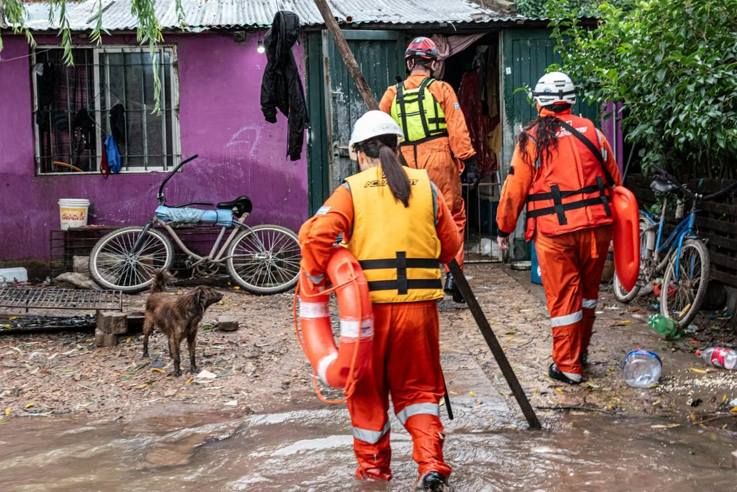
While families lost their homes, schools where young people were accustomed to spending their daily lives were transformed into shelters. The Vereador Raymundo Hargreaves Municipal School, in the Bom Jardim neighborhood, was one of 15 schools in the municipal system converted into a shelter. The space became a hub for welcoming people who had lost their homes, their belongings, and their sense of security. According to Vice Principal Laurisa Barreto do Nascimento, collective effort was essential to getting through the most difficult days. Even as the school opened its doors to dozens of people, it itself was grieving the loss of its students.
Juan Moccagatta
“It was a loss that affected us deeply. Because of our daily interactions with them and the young age of these children, we still haven’t been able to come to terms with this grief. We’re constantly on the move inside the school, but all it takes is a glance at the spaces, at the little corners, for the memories to come flooding back. It’s impossible not to remember,” said Laurisa Barreto do Nascimento.
To lessen the emotional impact on the children, teachers and volunteers created play areas inside the shelters. Toys, paints, brushes, paper, and recreational activities became part of these spaces, offering the children opportunities to play and, little by little, cope with the fear caused by the disaster.
What happened in 2026 is also part of a longer history of tragedies related to the terrain, rainfall, and urban vulnerability in Juiz de Fora. On January 10, 2004, a landslide that buried a house killed four members of the same family: three children—aged 4 months, 3 years, and 11 years—and their father. The recurrence of such incidents demonstrates that vulnerability is not an entirely new phenomenon, although the climate crisis heightens the urgency of addressing it.
For a city like Juiz de Fora, the challenge is particularly critical. The municipality has rugged terrain, soil saturated by recent tragedies, a collapsed drainage infrastructure, and a displaced population. About one in four residents of Juiz de Fora—or nearly 130,000 people—live in areas considered at risk for landslides and floods.
This reality must also be understood within a national context. About 40 million children in Brazil—equivalent to 60% of the child population—are simultaneously exposed to more than one climate-related risk, such as extreme heat, floods, drought, or pollution. For children and adolescents who are forced to relocate due to natural disasters or environmental degradation, the consequences can extend beyond the disaster itself. Often, these individuals lose access to school due to a lack of documentation or insecurity in their new region.
School infrastructure itself also reveals inequalities. Many public schools located in vulnerable areas lack adequate infrastructure to cope with the effects of the climate crisis, such as extreme heat, unlike many private schools. Extreme events, such as the floods in Rio Grande do Sul, have led to more frequent school closures, directly affecting the right to education.
What should have been happening for decades is planning. As El Niño advances across the Southeast, the vulnerability of an entire region continues to be neglected due to the lack of functioning climate governance structures. In a city where such a significant portion of the population lives in high-risk areas, preparation for extreme events cannot begin only after they occur.
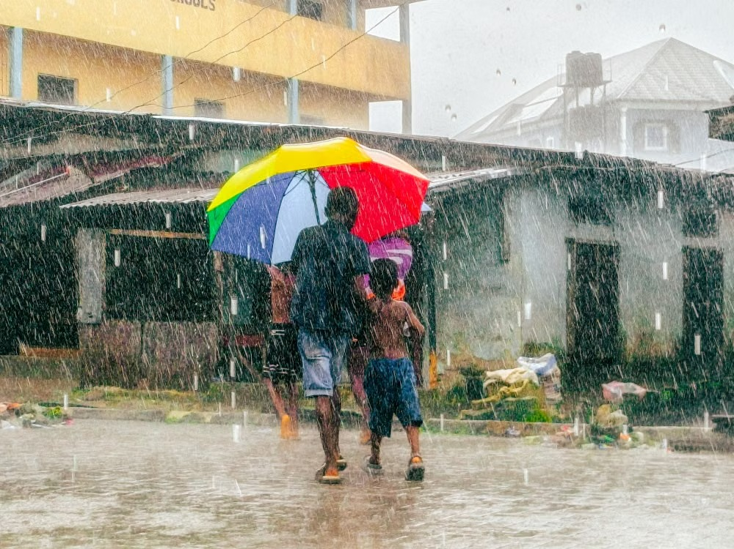
Above all, this preparation must take into account children in urban peripheries and other groups facing greater vulnerability. In this regard, the National Protocol for the Comprehensive Protection of Children and Adolescents in Situations of Risk and Disasters serves as a guiding framework that brings together recommendations for the development and implementation of protective measures before, during, and after disasters. The document proposes intersectoral and sector-specific guidelines focused on protection and civil defense systems, health, social assistance, education, justice, human rights, and child protection councils, reinforcing the State’s duty to ensure the rights of girls and boys in all circumstances.
Fawaz Onakoya
Protecting children in the face of the climate crisis, however, does not mean merely taking action after a disaster. It also means preparing them to understand, participate in, and respond to the changes that are already taking place. Action for Climate Empowerment, known as ACE, is a concept adopted by the United Nations Framework Convention on Climate Change to empower society to actively participate in solutions to the climate crisis. Children must not be left out of this process.
Climate education needs to be incorporated into schools and into the curriculum itself, accompanied by training and access to information. Data on climate risks must be transparent and presented in a way that children and communities can understand. Knowing what the risks are, where they are, and how to respond to them is an essential part of building a society prepared for extreme events.
In schools, climate education can be integrated in a cross-curricular and practical way. School gardens, for example, can bring students closer to environmental issues, while resilient and sustainable school architecture can incorporate green spaces and good ventilation. In this sense, the school ceases to be merely a space for transmitting knowledge and becomes part of the community’s climate adaptation infrastructure.
Direct contact with nature can also play an important role. Encouraging outdoor learning can help reduce climate anxiety and, at the same time, turn children into advocates for the environment. The relationship with nature need not be merely a pedagogical tool; it can also help children understand that they are part of the ecosystems that need to be protected.
Finally, protecting children in the face of the climate crisis requires active listening. Millions of children are exposed to climate risks in Brazil, and their priorities must be taken into account in forums, public policies, and local adaptation plans. Children are not merely victims or beneficiaries of climate policies: they are also part of the communities that experience these risks firsthand. This protection is a right enshrined in intergenerational justice, an ethical and legal principle that guarantees equity and the fair sharing of resources, rights, and duties among different generations.
The experience in Juiz de Fora has shown, in a painfully concrete way, that the climate crisis is not just a matter of temperatures, rainfall, or risk maps. It affects families, schools, community relationships, emotional well-being, and a child’s fundamental right to learn, play, and feel safe. When a school must become a shelter, when children are afraid to return home, and when teachers must balance providing support to families with their own grief, the disaster ceases to be merely an environmental event. It becomes a social, educational, and human crisis.
That is why the response cannot be built only after the next rain. It must begin earlier, through urban planning, climate governance, social protection, resilient infrastructure, climate education, access to information, and the effective participation of children and adolescents. In Juiz de Fora, where approximately one-quarter of the population lives in high-risk areas, preparing for the next disaster is not a distant possibility. It is an urgent responsibility. And in this preparation, protecting and listening to children must cease to be a secondary concern and become a central part of the response to the climate crisis.