Belém GAP at SB64: The Role of Gender and Climate Change Focal Points
Written by Izabela Friguetto, People and Culture Codirector, and Victória Rampazzo, Advocacy Director, at EmpoderaClima.
Following the latest climate negotiations held in Brazil, in Belém do Pará at COP30, the global climate and gender agenda is now entering a new phase: the implementation of the Belém Gender Action Plan (Belém GAP). It was precisely with this in mind that EmpoderaClima, as a FACJ/Generation Equality Committed Organization, attended and followed the first week of the 64th session of the Subsidiary Bodies of the United Nations Framework Convention on Climate Change, known as SB64, held, as usual, in Bonn, Germany.
Considered the main mid-term meeting between COPs, SB64 brought together a smaller and more technical audience than that of the annual conferences, comprising negotiators, experts, governments, companies, and civil society representatives, at a time focused on setting concrete agendas and political commitments leading up to COP31, which will take place in Antalya, Turkey (2026).
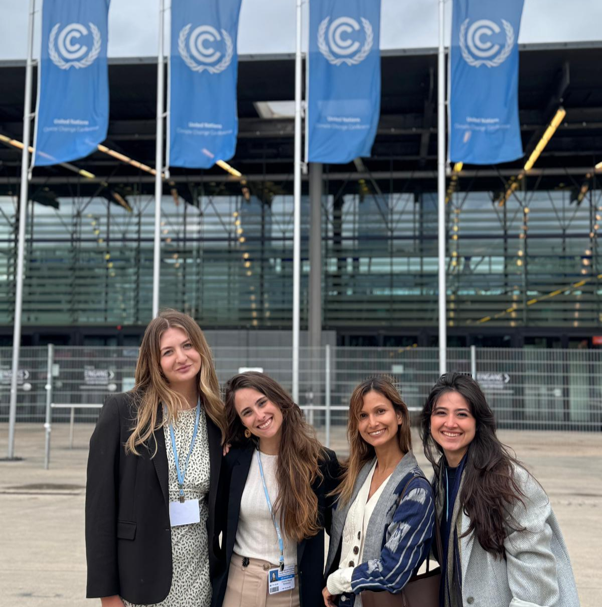
Source: EmpoderaClima at Bonn, 2025
Belém GAP and the Planned Mandated Workshops
Belém GAP (2026–2034) is the current international agenda responsible for integrating and including discussions on gender issues in climate diplomacy negotiations. In this context, the instrument is structured as a work plan and outlines deliverables, some of which were already scheduled for the 2026 meeting in Bonn.
National Gender and Climate Change Focal Points (SB 64 Deliverables - A.2.1)
One of the deliverables was the organization of a two-day workshop outlined in “deliverable A.2.1,” which focused on discussing the role and responsibilities of the NGCCFPs (National Gender and Climate Change Focal Points). The main objective of this meeting was to reflect on the functions currently performed and the roles envisioned for this position, as well as to promote the exchange of best practices and identify capacity-building needs among countries.
On the first day, the working groups discussed the main activities of the NGCCFPs and the institutional challenges associated with their roles. Key issues included integrating a gender perspective into climate policies and participating in UNFCCC processes and other forums on gender and climate. However, differences in institutional capacity and resources among countries hinder actions such as capacity building, knowledge sharing, and resource mobilization for national initiatives.
In addition to other challenges, the NGCCFPs struggle to coordinate across different ministries and integrate a gender perspective into various sectors. Therefore, a clear national mandate, access to decision-makers, adequate resources, and mechanisms for intersectoral coordination are essential.
The second day prompted reflection on practical experiences and mechanisms for regional collaboration, particularly regarding issues of funding, engagement with civil society, and collaboration with national statistical institutes in the production and use of data, including coordination among regions.
Data disaggregated by gender and age (SB 64 Deliverables - D.5.2)
“Deliverable D.5.2,” meanwhile, took the form of an expert dialogue focused on the challenges and opportunities associated with the production, collection, use, and strengthening of data disaggregated by gender and age, as well as the integration of gender analysis into climate policies. The event sought to map the current landscape of data relevant to climate action, identify methodological, institutional, and financial gaps, and promote more coherent and inclusive approaches to support evidence-based policymaking. According to the UN Women's 2026 technical paper, although heat affects all age groups, children, adolescents, adults, and older adults face distinct vulnerabilities to it. Furthermore, the gender dimension can amplify or alter risks within each age group.
The first phase brought together experts and government representatives to discuss the use of gender-disaggregated data on climate change. The discussions highlighted the need for greater investment, better coordination among institutions, and more aligned methodologies. Best practices were highlighted, as was the importance of initiatives such as GEDA. Studies were also presented showing how factors such as gender, age, and socioeconomic conditions influence the impacts of climate change, including the Gender and Environment Data Alliance (GEDA), CLIMATE CHANGE 2023 (Intergovernmental Panel on Climate Change - IPCC), Gender equality and climate policy scorecard | UN Women – Headquarters and Brochure: Understanding Climate Risks Through an Intersectional Approach (iCRA).
In the second phase, participants worked in groups to identify information gaps and areas for improvement in inclusive climate policies, focusing on care, health, violence against women, and the participation of men and boys in climate action.
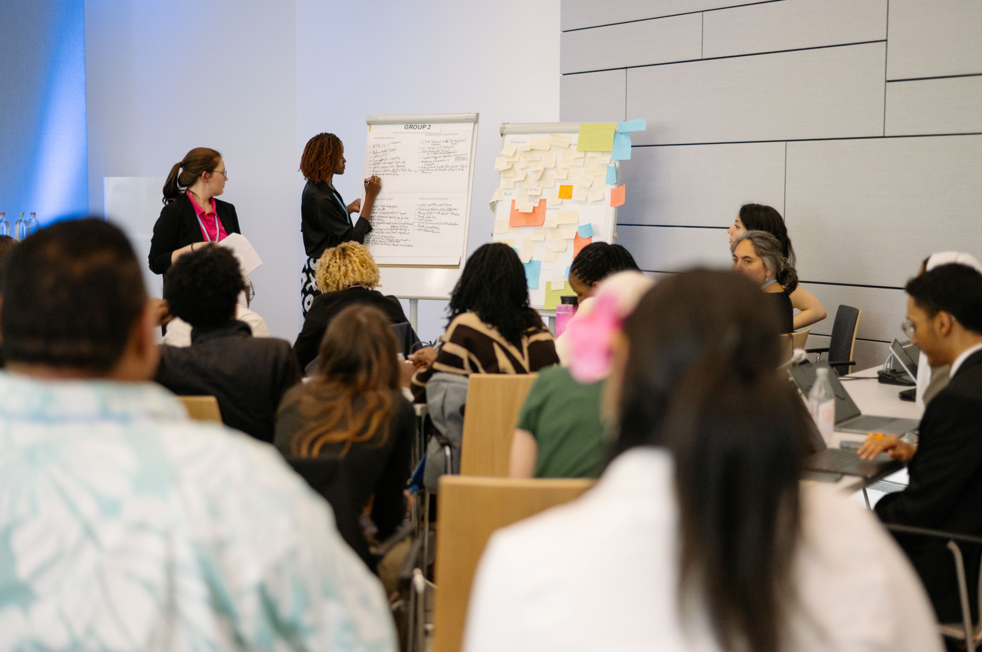
Credits: UNFCCC - Pamela Elizarraras Acitores
Gender-Responsive Climate Finance (SB 64 Deliverables - D.4.3)
The gender perspective has been incorporated into climate commitments since the Convention and the Paris Agreement and, more recently, in the Belém GAP (Decision 7/CP.30). We are now entering the implementation phase. One of the mandated events outlined in the Belém GAP is the advancement of methods to improve gender-responsive climate finance.
This SB64 event marked the first annual dialogue on progress in implementing gender-responsive climate finance, bringing together the operational entities of the Financial Mechanism, multilateral climate funds, and NGCCFPs. A dialogue is expected to take place at every SB session.
It was strongly emphasized that, despite the increase in the overall volume of climate finance, this does not directly mean that there has also been an increase in funding dedicated to gender issues. In addition to increasing the volume of funding, it is also necessary to consider accessibility, equity, and effectiveness, so that women and marginalized groups actually benefit.
The problem begins with the lack of sufficient data to address the issue: it is unclear exactly how much of climate finance is actually allocated to gender. According to the Biennial Assessment and Overview of Climate Finance Flows and the OECD-DAC indicators, the available data is largely limited to planning and intentions, rather than results following implementation efforts. This highlights an even more serious situation: it is unclear what proportion of climate finance is truly gender-sensitive, nor how gender considerations—or the lack thereof—influence the design and implementation of projects and, ultimately, the sustainability of the results.
These challenges are present in private, public, and mixed financing alike. In light of this, five priorities were identified to advance the agenda: standardizing metrics and sharing benchmarks, building on existing frameworks (such as the OECD marker, the 2X Challenge, and other gender-related tools and frameworks already developed by climate funds); investing in capacity building, supporting project teams and local partners in the practical application of these benchmarks to real-world businesses; funding long-term outcomes, not just short-term outputs, tracking immediate indicators (such as jobs created and the number of beneficiaries) alongside more lasting changes in women’s income, assets, and decision-making power; breaking down the “two silos”, intentionally bringing climate investors and gender-focused investors together through blended finance structures and technical assistance programs; and designing transactions to remove barriers to access, structuring deals so that women can access financing, capacity-building, and leadership positions from the outset of the process, especially in the energy and infrastructure sectors.
The Role and Responsibilities of the National Gender and Climate Change Focal Points (NGCCFPs)
The National Gender and Climate Change Focal Points (NGCCFPs) are representatives appointed by governments to help incorporate a gender perspective into climate policies and actions. Their role is to bridge the gap between internationally agreed commitments and their practical implementation in each country.
This position, while not creating a new, binding bureaucratic structure, is progressively defined through three decisions of the Conference of the Parties—3/CP.25 (Lima Work Program on Gender), 7/COP.29 (Gender and Climate Change), and 7/COP.30 (Belém Gender Action Plan)—which together outline an increasingly detailed functional profile for this role.
In summary, countries are encouraged to appoint and support these representatives, but there is no obligation to do so. Consequently, the structure, resources, and operational capacity of NGCCFPs vary from country to country, depending on national priorities and conditions.
To strengthen this work, the UNFCCC has been promoting capacity-building initiatives, such as training sessions, workshops, exchanges of experiences, and support networks among the focal points themselves. The goal is to expand their knowledge and make their responsibilities clearer and more effective.
Another major challenge is funding. Although there are initiatives to support NGCCFPs’ participation in international meetings, this support depends on the availability of resources, which can limit the participation of representatives from countries with less financial capacity.
In addition, NGCCFPs contribute to the production and use of data on the impacts of climate change on different social groups, especially women, indigenous peoples, and local communities. They also help disseminate information on gender and climate and can contribute to discussions on climate finance.
In this way, the focal points serve as liaisons between gender policies and climate action, helping to make responses to climate change more inclusive and sensitive to different social realities.
Institutional Challenges in Practice: A Long-Standing Weakness
A 2021 WEDO study had already highlighted the same institutional problems that the NGCCFPs would report five years later in SB64. The reason was structural: gender and climate have always been treated as separate agendas, each organized in its own way—gender focal points tended to operate in a more sector-specific manner within specific ministries, while climate governance already required dialogue between different sectors, such as agriculture and education. Since the NGCCFP needs to bring these two agendas together, it ended up having to operate within structures that were not designed to facilitate communication between them. For this reason, according to WEDO, the success of the position depended heavily on the ability of the person holding it to connect these two agendas in practice.
The study also showed that the position was already beginning to shift away from dependence on a specific individual and become part of the countries’ institutional structures. Senegal, for example, already had an organized process for transitioning the position from one NGCCFP to the next—an important development, given that many of the early appointees had been chosen for their personal involvement with the issue. Other countries went further and divided the role among more people: the Democratic Republic of the Congo had more than one NGCCFP, and Haiti supported its focal point with a team, which helped manage a workload that requires coordination at various levels and support for local actions.
Each country also utilized the position in a different way, according to its priorities, a practice that is now reinforced by the Belém GAP. In Liberia, the NGCCFP focused on securing funding for women-led environmental activism, since climate finance for less developed countries was a central issue. In Haiti, the position served to bridge the gap between gender and climate within the country’s National Committee on Climate Change, strengthening collaboration between the two areas—an effort that, according to WEDO, should serve as the foundation for the country’s future National Action Plan on Gender and Climate Change.
The study also distinguished between two concepts that would only be formalized by the Belém GAP years later: terms of reference (ToR) and work plans. For WEDO, the ToR should be linked to the role, not the individual, so that responsibilities would remain clear even when someone new took over. This same idea appears today as a goal of the Belém GAP (activity A.2.3), demonstrating that this formalization addressed a problem that had been identified long ago.
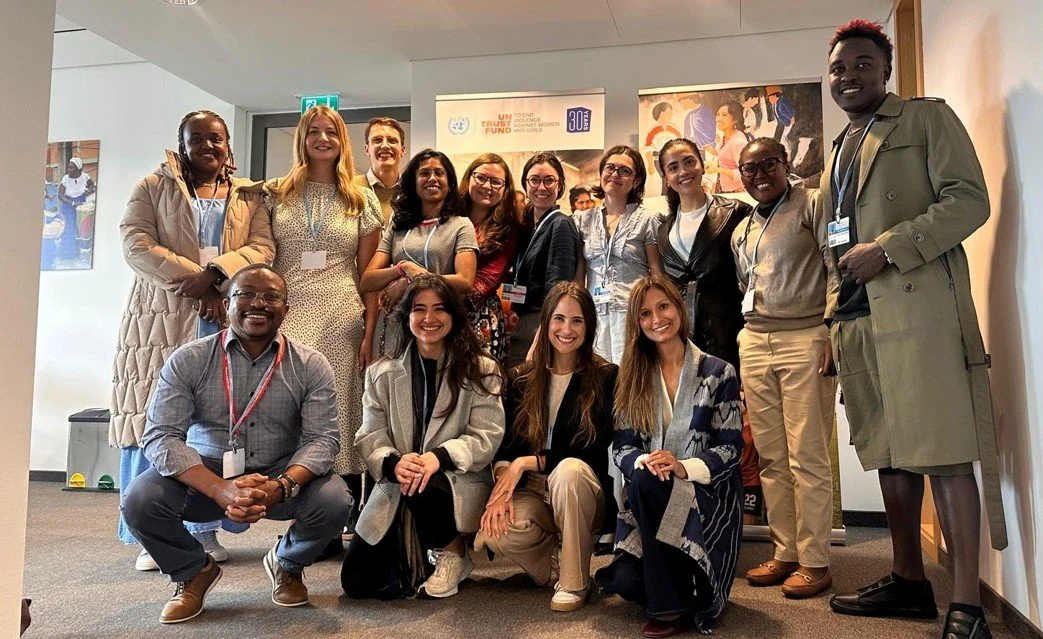
Source: EmpoderaClima at Bonn, 2025
The position of NGCCFP has been in the works since 2019, when Decision 3/CP.25 first recommended its establishment. In 2024, Decision 7/CP.29 strengthened the role by including travel support and extending the focal point framework to the Secretariat itself. Then, in 2025, Decision 7/CP.30 (Belém GAP) established targets with deadlines extending through SB 74/COP 36 (2031), formalized the requirement for a national job description, and created specific support mechanisms.
Despite this progress, the regulatory framework has significant structural weaknesses: (i) because it stems from a recommendation rather than an obligation, its adoption, funding, and institutional stability vary widely among countries, and (ii) because it depends on a budgetary conditionality, the Secretariat’s support is subject to financial availability, which may exacerbate disparities between focal points in developed and developing countries.
Until the Belém GAP, there was also no formal requirement for countries to clearly define the responsibilities of the position—a gap that Activity A.2.3 now seeks to address, but which had already been documented since 2021 by the WEDO study. This indicates that the belated requirement for a formal description addresses a problem that has been known for years, rather than a recent discovery. The same pattern of weaknesses was reported by the NGCCFPs themselves in SB64, reinforcing this interpretation. Today, 126 countries have already appointed a representative to the position, but SB64 highlighted their weak presence in the negotiating process and the lack of support and training provided by states.
In summary, the NGCCFP has established itself as a central pillar of gender mainstreaming within the UNFCCC, but its effectiveness remains limited by the advisory nature of the position and by resource inequalities among countries: a paradox that the Belém GAP seeks to mitigate, without, however, altering this non-binding legal framework.