The Hidden Gender Cost of Ecocide in War
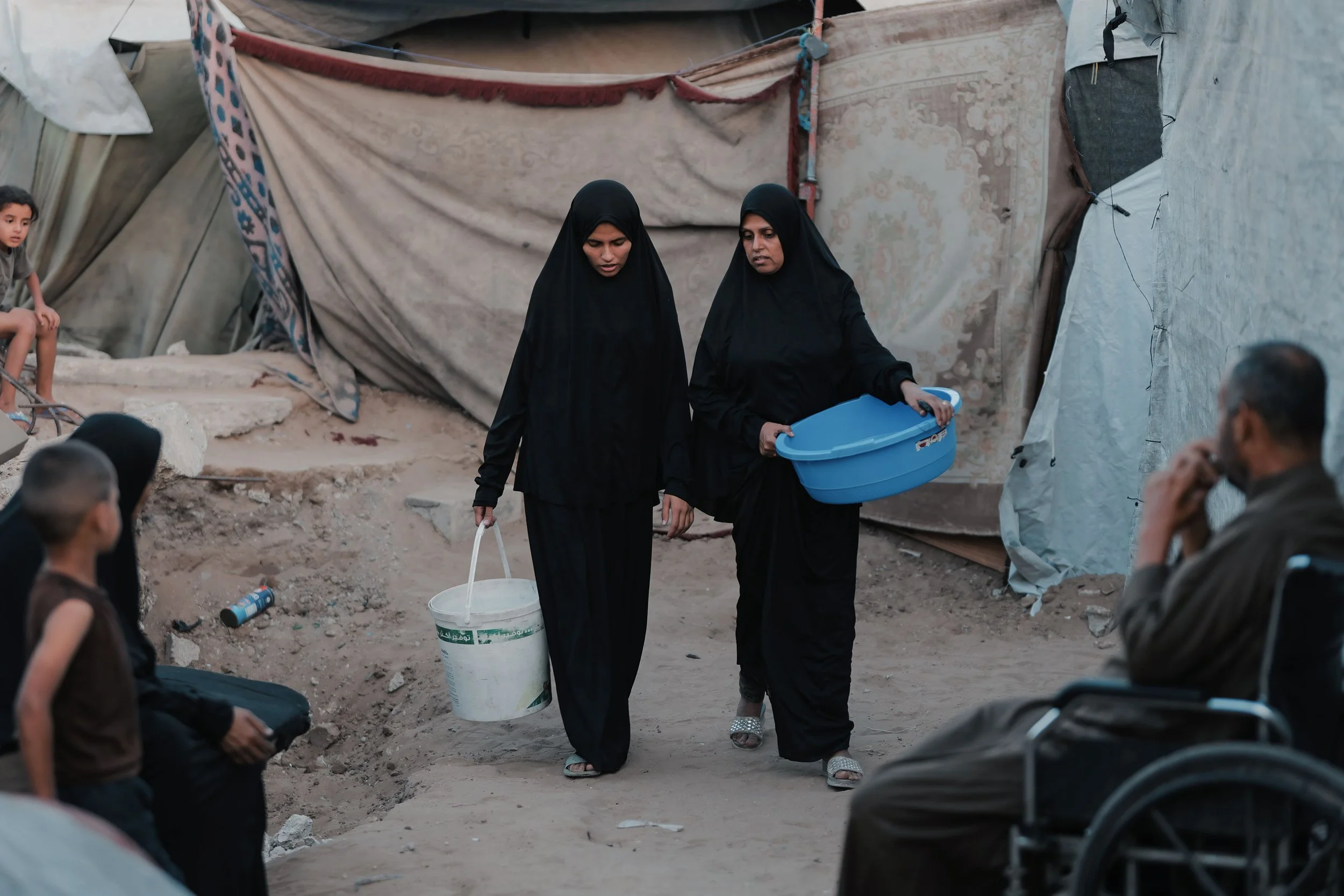
Women carry supplies in a Gaza refugee camp.
Credits: Hosny Salah
Written by Amanda Legórburu, Researcher at EmpoderaClima
The climate crisis is a symptom of different systems of oppression that serve profit over people and nature, including capitalism, racism, patriarchy, colonialism, and militarism. These consider forms of life as objects to be owned, controlled, and consumed, and women, indigenous peoples, and poor communities are often exploited and disproportionately impacted. As the crisis continues to escalate, the international community has continued to fail to address these systems and their impact. Instead, many states have continued to finance military activity, causing significant climate and environmental destruction as well as insecurity and violence.
Not only are militaries amongst the most carbon-intensive institutions, but they also contribute to the environmental degradation of the land, the production of greenhouse emissions, the decrease of Earth’s biodiversity and the extraction of minerals and fossil fuels for the arms industry to develop even more destructive weapons, such as nuclear bombs. In just two months after the start of the 2023 war in Gaza, the planet-warming emissions, generated by Israel bombings and the destruction of around half of Gaza’s infrastructure, surpassed the annual carbon footprint of more than twenty of the world’s most climate-vulnerable nations. This ongoing research on military emissions helps understand their immense magnitude, which is not only about preparing and carrying out conflict, but also the carbon emissions needed to rebuild after.
Fossil fuels come into the discussion as they are the driving force of conflict and military activity worldwide, especially where the militaries are dependent on them as an energy source. Militaries are exempt from the states’ obligation to report on their greenhouse gas emissions, as required by the Kyoto Protocol, because they believed imposing limitations on tactical and strategic military systems would adversely impact operations and readiness. Even in the 2015 Paris Agreement, reporting military emissions remain voluntary, allowing countries to continue their pollution all the while they have been framing the climate crisis as a threat multiplier and combating it with militarized responses.
Preventing conflict plays a big part in climate efforts, especially with demilitarization, which is the process of reducing the role, power, and resources of military systems and redirecting those towards climate finance, low-carbon economies, and communities. This includes transparency and accountability for its ecological impacts, the implementation of international disarmament and arms control agreements, reallocation of military spending to gender-transformative climate action, investment into diplomacy and environmental peacebuilding; uplifting of intersectional feminist analysis of safety and security, and a just transition from war economies to green care economies and the regeneration of the planet.
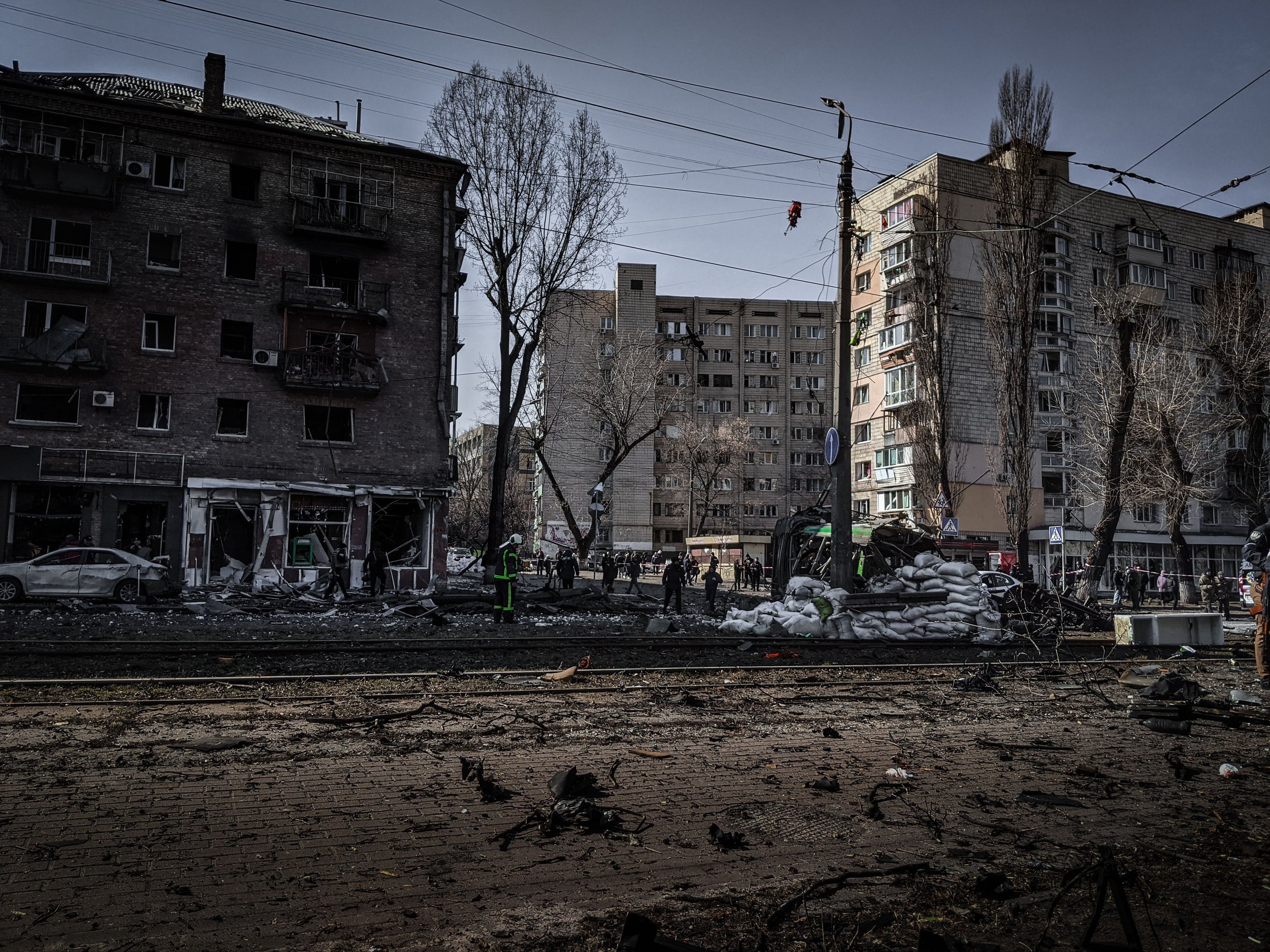
Destruction on city streets in Kyiv showcasing the aftermath of urban conflict.
Credits: Алесь Усцінаў
Conflict is not only violent, but it has negative effects on climate: it destroys ecosystems and sustains fossil-fuel dependent economies. From Ukraine to Gaza to Colombia, people are not only the most affected by war, militarization, armed conflicted, or occupation, but damage extends itself to infrastructure, crops, coastlines, water, and biodiversity, showing that conflict has environmental impacts for public health, ecosystems and the climate that can last for decades. Women are often caught in the middle as the most affected within these climate-vulnerable communities.
Women and girls suffer disproportionately from conflict, not only from the by-products of war but they are also targeted as part of the strategy through rape and sexual violence. In a press release from 2025, the United Nations raised alarm for the impact the prolonged conflict in the eastern Democratic Republic of the Congo (DRC) had on women and children, especially as offensives by non-state armed groups destroyed sites where internally displaced people had been living. They specifically warned about sexual violence being used as a widespread and systematic tactic to terrorize and punish civilians.
The presence of fossil fuels correlates most of the times with intense violence during armed conflict and the influence of armed groups and organized crime. Colombia’s and Venezuela’s armed conflict has overlapped with extractive industries where deforestation, pollution, and militarized security forces have both displaced communities and damaged ecosystems. Women are some of the forefront environmental defenders but they face violence, threats, evictions while being the ones to organize water, food, and peacebuilding.
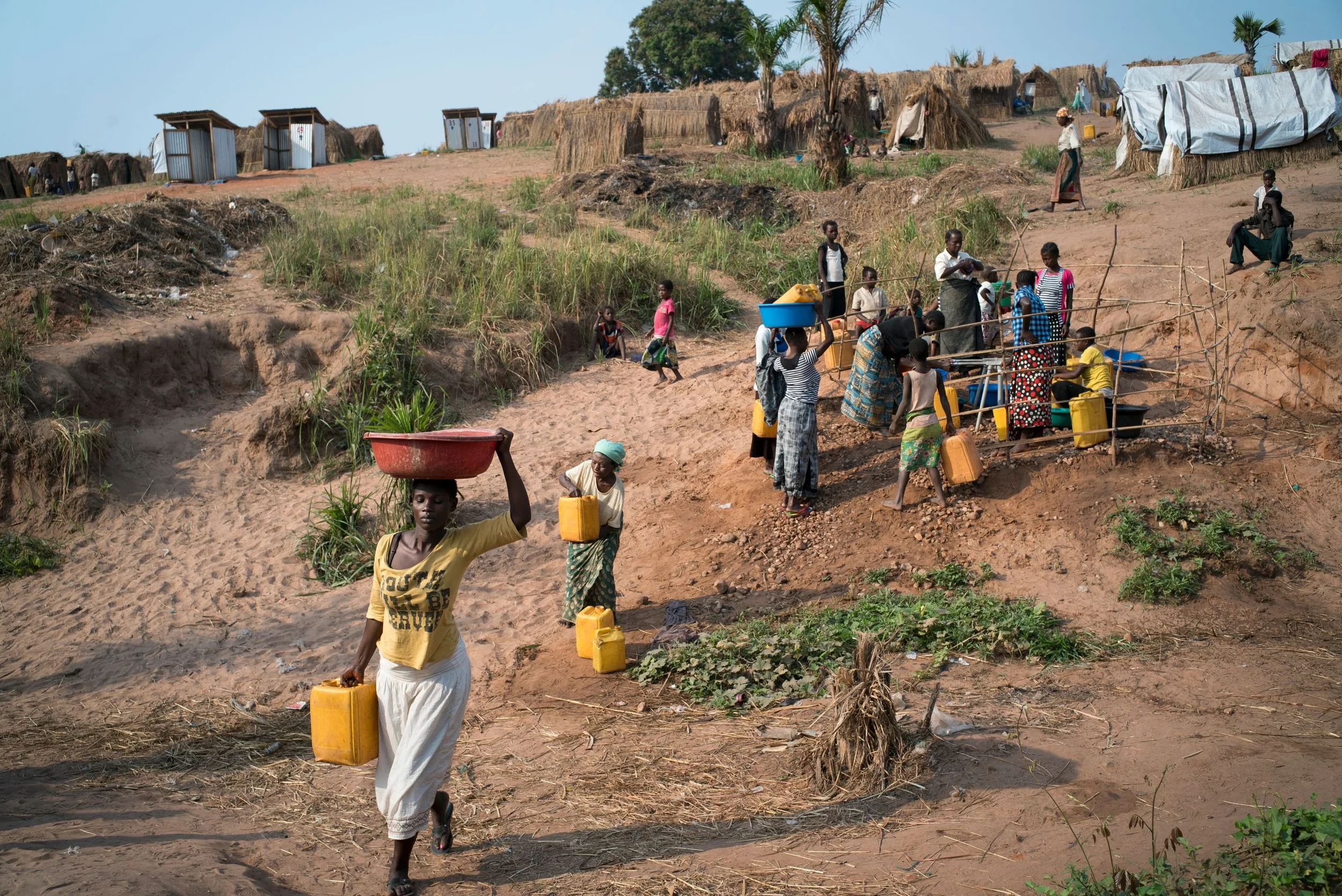
A group of villagers gathers water near Kalemie, DR Congo.
Credits: Alain Nkingi
Women can have different roles to play during conflict, especially after the fact. Upheavals of conflict can bring in new opportunities for transforming gender relations and promoting more inclusive social, political and economic structures. This is more difficult in practice, as issues related to women’s rights get in the way with their participation in the process of state and peacebuilding. However, feminist climate analysis should target the system, not only the damage done. Gender is oftentimes also considered a nonpriority issue that is sidelined during conflict, and policymakers have insufficient knowledge in how to integrate a gender dimension into their strategies. Instead, a serious climate justice approach should question the political and economic entities that profit from militarization and environmental destruction, rather than treating them as separate crises.
Women face layered harm in these conflict zones, which is why a feminist perspective is necessary while discussing climate and peace frameworks. Failing to include this gender dimension into post-conflict policy has detrimental effects for both men and women, and in these cases, women’s roles in households and communities depend on their ability to access resources, even during conflict. Gender inequality has been shown to be linked to violent conflict, with an older study by the World Bank in 2003 finding that extreme and systematic gender inequality is correlated to political violence. So, even if daily life is disrupted by war, the responsibilities women carry remain the same but with more environmental pressures. In Sudan, displaced women are still tasked with collecting fuel and water, but deforestation in refugee camps forces them to travel further, exposing them to gendered risks such as rape and harassment.
States, especially those affected by conflict, should recognize the gender-specific impacts of the climate crisis and include these considerations into climate mitigation and conflict prevention. Thus, they should not only include assessments for the structural causes of conflict and gender inequality, as are corporate and colonial powers, but they should also create plans to end armaments and for fossil fuel and military divestment, demilitarisation, and disarmament. Instead, funds should be directed towards building systems of solidarity and care, mitigating the climate crisis, building green energy, ending hunger and poverty, and investing in gender equality.