By Ana Paula Barbosa, Fundraising Coordinator; Helena Teich, Legal Director; Luiza Caleia, Researcher; Yasmin Soares, Legal Advisor at EmpoderaClima
COP 31 made history for the wrong reason. For the first time, two countries formally shared the leadership of the Conference of the Parties (COP) to the United Nations Framework Convention on Climate Change. At COP 31, held in Antalya, Turkey assumed the general presidency and the Action Agenda, while Australia led the formal negotiations. This unprecedented format, however, contrasts with the expansion of fossil fuels in the host countries themselves and did not prevent the conference from ending without consensus on its central political text. This impasse helps explain why urgent issues related to the climate crisis have been sidelined and what role women and civil society have played in demanding results.
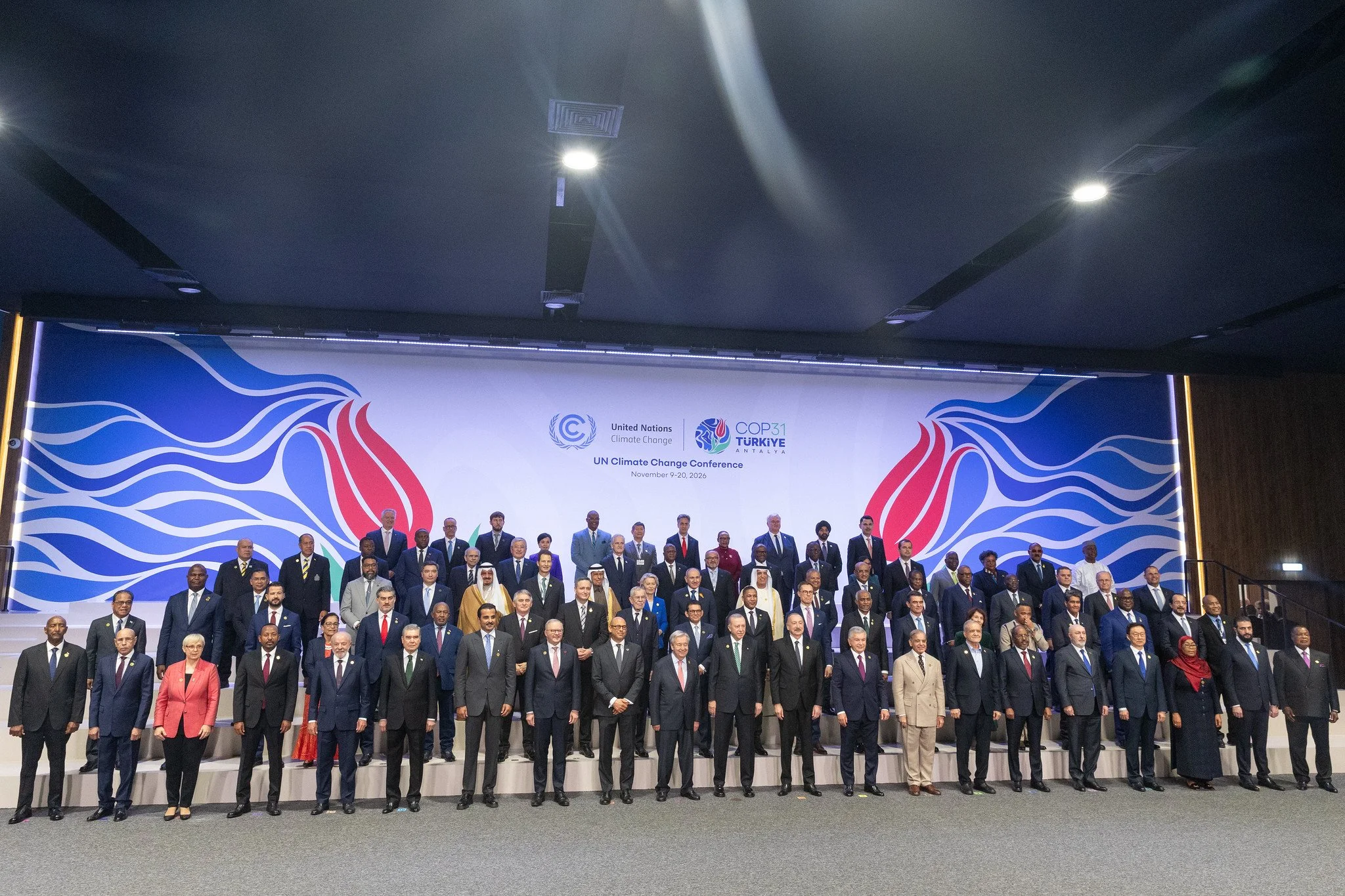
Look at this image: who is represented among those deciding the planet’s future? Women’s participation has advanced, but equal power at the negotiating tables is still far from a reality. Photo: © UN Climate Change - Kiara Worth)
A year earlier, at COP30 in Belém, countries approved a just transition mechanism, adopted a Gender Action Plan, and established a two-year work program on climate finance covering Article 9 of the Paris Agreement. With no consensus on ending fossil fuel use and deforestation, the Brazilian presidency led on “roadmaps” for both issues, to be presented in Antalya.
The expectation for COP31 was to put the Belém decisions into practice, with more structured plans, clearly defined pathways, and quantifiable results. Antalya also committed to launching the second Global Stocktake (GST 2), which assesses whether the planet is on track to meet the Paris Agreement, decides the future of the emissions reduction program (MWP), and tracks progress on mobilizing resources for adaptation.
Reality, however, proved otherwise. With nearly 93,000 in-person registrants and 3,300 online participants, the negotiations stretched on for more than 30 hours beyond the scheduled deadline, making COP31 the longest in history. Financing was the major sticking point across all agenda items. On one side, developing countries—organized into blocs such as the G77 and China and the African Group—were emphatic in stating that they cannot meet climate targets without recurring resources and demanded that developed countries comply with Article 9.1 of the Paris Agreement, which establishes these nations’ obligation to provide financial resources for mitigation and adaptation to the most vulnerable regions. On the other hand, wealthy countries, such as the European Union, Canada, and Japan, refused to foot the bill alone and insisted on private-sector participation and expanding the list of contributing countries. Before the opening of COP31, European Climate Commissioner Wopke Hoekstra told Bloomberg that “any talk of new money is dead in the water.” This scenario reveals low investment and delays in disbursing funds, often in the form of interest-bearing loans that push the poorest countries into even greater debt. The result is scarcity and unfulfilled promises: the Adaptation Fund raised only $50 million, far below the annual target of $300 million. In the Loss and Damage Fund (FRLD), only $485.77 million of the $822.71 million pledged had been disbursed by July 2026—a fraction of the $2.8 billion in funding needs identified by 119 countries.
COP31 was the first summit where governments had to directly confront the concept of overshoot: the period when the planet exceeds the 1.5°C threshold before attempting to reduce the temperature again. As delegations from the Pacific warned, this technical term masks irreversible damage for those already living on the front lines of the crisis. Despite strong mobilization by island nations in support of the oceans agenda and rapid emissions cuts, resistance from oil- and gas-producing countries blocked any political response commensurate with what science demands.
In light of these issues, the COP presidency presented the “Antalya Pact,” a document that represented the conference’s central political decision. The text removed all references to the transition away from fossil fuels and included a voluntary electrification target tied to carbon capture technologies—with no guarantee of clean energy— which sparked accusations of greenwashing and “false solutions,” fueling criticism that regained visibility with the presence of activist Greta Thunberg five years after her absence from COPs. Faced with a text deemed weak, countries such as the European Union, the United Kingdom, Norway, Panama, the Marshall Islands, Vanuatu, Belize, and other small island states refused to approve it, and the conference ended without a final declaration—a situation that had not occurred since 2009. As a direct result, the rejection undermined support for the IPCC’s scientific timeline for the next Global Assessment Report and derailed the progress expected on the mountain and ocean agendas.
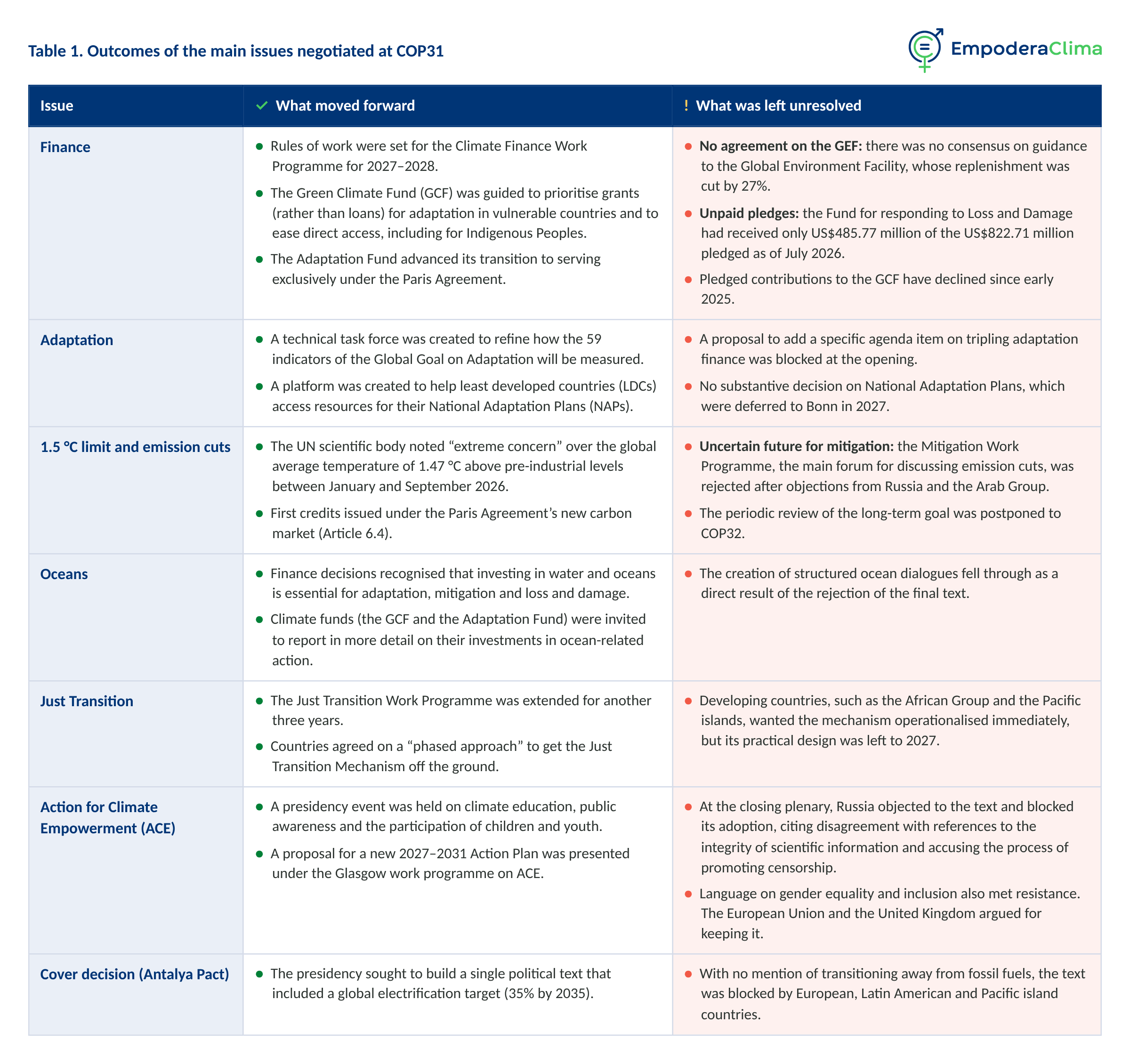
Source: Compiled from the Earth Negotiations Bulletin (IISD), Vol. 12, No. 912 (Nov. 24, 2026).
The results summarized in the table made clear how the lack of consensus in Antalya affected the entire conference process, and they also show the political will to avoid signing a hollow final declaration—one lacking a path toward phasing out fossil fuels and without real financing guarantees. The article then analyzes how this dispute played out in the gender agenda and civil society mobilization, leading up to the debate on the future of consensus at COP32 in Addis Ababa.
The Belém Gender Action Plan (GAP) and Its Erosion in Antalya
Conceived in the context of the COP 30 negotiations, the Belém Gender Action Plan (GAP) was presented as a milestone for strengthening the implementation of gender policies within the climate agenda. The plan is based on the recognition that the impacts of climate change are not evenly distributed across social groups but are shaped by structural, intersectional, and historically constructed inequalities. In this context, women and girls—especially Black women, Indigenous women, and those living in peripheral, rural, and riverside areas—are disproportionately exposed to climate risks and vulnerabilities, which calls for institutional responses capable of incorporating a gender perspective and climate justice into decision-making, implementation, and governance processes.
Given these circumstances, the plan establishes a nine-year implementation timeline, with operational actions set to begin as early as 2026. Among its guidelines, key initiatives include those aimed at eliminating barriers to women’s participation in decision-making processes related to climate policy, strengthening protection mechanisms for women environmental defenders, and consolidating national gender and climate focal points.
However, although it represents a significant institutional advance—particularly because it explicitly addresses the barriers that limit women’s presence in decision-making spaces—the Belém GAP emerges in a context of weaknesses regarding the material conditions necessary for its implementation. This is because, despite recognizing the need to expand the gender response in climate finance, the plan has not yet been accompanied by concrete guarantees to mobilize the resources needed to make its actions feasible. The expectation that this gap would be addressed in subsequent negotiations—especially during COP 31—highlights a central tension between the normative and political advancement of the gender agenda and the effective provision of the financial resources necessary for its realization.
In Antalya, the COP31 negotiations on the gender agenda revealed obstacles that go beyond slow progress in implementing gender equality, extending even to the preservation of the consensus previously established in the GAP. As the Women and Gender Constituency (WGC) noted, the Conference was expected to offer an opportunity to deepen existing commitments, particularly by strengthening measures outlined in the Plan, such as those related to financing and women’s participation in decision-making processes. On the contrary, the discussions were marked by the resurgence of previously faced controversies and attempts to alter the terminology used in published technical reports. The extent of this erosion can be seen in the reduction of a draft decision—originally consisting of eleven paragraphs—to just five, predominantly focused on procedural aspects.
Furthermore, the very language used in multilateral documents has become the subject of political dispute. Key points of disagreement included the Russian Federation’s attempt to replace the term gender-responsive with “gender-sensitive,” as well as gender-disaggregated data with “sex-disaggregated data.” The gender-responsive approach presupposes action to identify and address structural gender inequalities, whereas the gender-sensitive perspective, while acknowledging these inequalities, does not necessarily imply adopting concrete measures to overcome them. Similarly, replacing references to gender with the category sex may limit the analytical scope of the data by pushing into the background the social, political, and structural dimensions that shape the differing experiences of women and men in the face of the climate crisis.
Another noteworthy episode was the impasse over approval of the new Action for Climate Empowerment (ACE) Plan, scheduled for 2027 to 2031. The plan was intended to strengthen climate education, capacity building, public awareness, and access to information, while also addressing issues related to the protection of human rights and environmental defenders. However, disagreements over gender equality, human rights, intersectionality, and combating climate disinformation prevented the necessary consensus for adoption. During the closing plenary session, the Russian Federation objected to the negotiated text, preventing its approval. As a result, discussions were postponed to the 66th session of the UNFCCC’s subsidiary bodies, scheduled for June 2027.
A joint analysis of these episodes reveals a common thread in the Antalya negotiations: the difficulty of translating multilateral consensus into concrete implementation tools. Within both the GAP and the ACE, provisions on gender equality, human rights protection, and social participation faced repeated challenges, shifting the negotiations' focus from developing measures to preserving previously recognized commitments. This scenario highlights the limitations of multilateral decision-making, especially when the requirement for consensus becomes an obstacle to consolidating collectively negotiated advances. For the gender agenda, the outcome is particularly significant, as—in addition to facing historical barriers to participation in decision-making forums—women and organizations defending equality must mobilize to prevent rights and commitments already incorporated into the climate agenda from being narrowed.
Between Belém and Antalya, therefore, a central contradiction in contemporary climate governance is evident: although multilateralism has made progress in recognizing that gender equality is an indispensable condition for fair and effective climate responses, its ability to ensure the implementation of these commitments remains limited by political disputes and the absence of sufficient accountability mechanisms. The challenge is not only to preserve the language secured but to ensure that commitments translate into accessible financing, substantive participation, and women’s leadership in decision-making processes. After all, there is no truly inclusive climate governance when those who play a fundamental role in responding to the crisis remain underrepresented in the forums where their priorities and resources are defined.
Civil Society at COP31
Civil society plays an important role in the climate conference process, as organizations, movements, and networks bring the voices of those who feel the impact of the crisis into the room, demand that agreements be put into practice, and, in some cases, can influence the outcome. The Just Transition Mechanism (Belém-Antalya Mechanism—BAM), one of the key outcomes of COP30, is an example that emerged from a call by civil society, through a campaign led by the Climate Action Network (“CAN”) and the Global Campaign to Demand Climate Justice (“DCJ”), with crucial participation from feminist organizations, whose members—including young women—led the effort to develop the proposal.
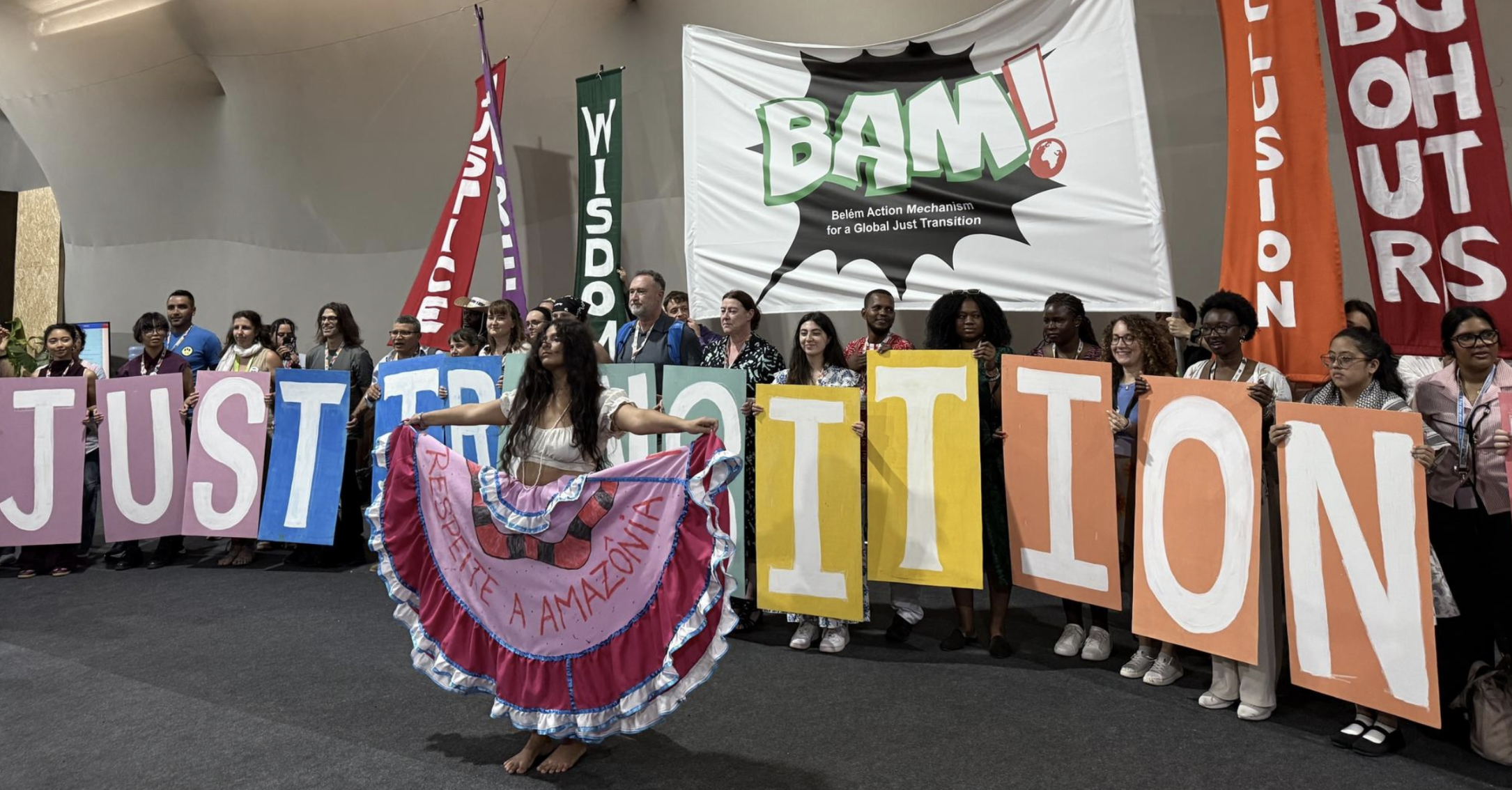
At COP31, 12,413 NGOs were present. Among them, women arrived with a specific agenda. The Women and Gender Constituency (WGC), which brings together women’s and gender organizations at COP, outlined 11 priorities, including implementing the Belém Gender Action Plan, new and additional public financing that does not generate debt, and a just, feminist transition. The WGC held a daily caucus, open to activists and allies, to coordinate strategies and brought to the negotiations the joint declaration by indigenous women, women with disabilities, and young people, which was read for the first time on November 10. In addition, several organizations hosted side events; for example, WECAN organized side events with Indigenous and frontline leaders on November 16 and 18, while the Alziras Institute participated in the November 18 panel on the multidimensional factors of the Gender Action Plan (GAP), among other initiatives.
Young people also arrived at COP31 with a collective agenda. The Global Youth Statement 2026, coordinated by YOUNGO, brought together contributions from more than 100,000 young people from 90 countries, developed through local and regional consultations and more than 50 sessions to draft proposals. The process required months of coordination and volunteer work to finally reach the COP presidency and the negotiators. During the conference, young activists denounced the gap between the spaces for dialogue offered and the actual power to influence decisions. As Sidra Riaz, a Pakistani activist present at COP31, summarized: “Visibility is not influence.” In the final stretch, YOUNGO published an open letter criticizing the negotiated texts for failing to reflect the priorities and expectations of younger generations.
On the Brazilian side, the delegation was the second largest at COP, with 1,994 people, second only to Turkey. CONAQ brought to Antalya the organization’s first international delegation composed entirely of Quilombola women. The delegation’s letter calls for territorial rights, participation with decision-making power, and direct access to international climate finance mechanisms, with fewer bureaucratic barriers.
The agendas vary, but one request is consistent: that the money go directly to those doing the work. At a meeting with President Lula on November 12, Joziléia Kaingang, an indigenous leader of the Kaingang people, asked that funding be directed directly to indigenous peoples, respecting their governance. In an Agence France-Presse (AFP) report during COP, Rosaline Parker of Samoa made the same case for communities in the Pacific Ocean region. In the gender text under negotiation, the second draft version included, in square brackets, a call for expanded support for developing countries, including direct funding for women-led organizations. The text, however, was not approved at COP. This is the same discussion regarding the means of implementation of the GAP addressed in the previous section, from the perspective of those awaiting the funding. The figures help illustrate the urgency of the problem. According to UN Women, only 4% of climate-focused development aid prioritizes gender equality, and women hold 12% of energy portfolios worldwide. Although 73% of national climate plans recognize gender-specific risks, just over one-third address the issue comprehensively.
Before the COP, guidance was circulated advising participants not to interfere in Turkey’s internal affairs, and Amnesty International criticized clauses in the host agreement that could affect human rights defenders. The November 14 march was authorized, but banners and signs were subject to screening, and protesters avoided more controversial messages to protect local participants. Even with these warnings, civil society maintained its presence and continued to hold officials accountable.
Dissatisfaction with the direction of the negotiations was evident in the streets and at the entrance to the plenary session. The November 14 march drew more than 7,000 people, according to police, and more than 10,000, according to organizers, and called for more decisive climate action, as well as human rights and democratic freedoms. In the final stretch, Malaysian artist Amalen staged a protest during the first closing plenary session, an act that received widespread media coverage. Outside the plenary session, dozens of activists protested in silence, with tape over their mouths and signs bearing the words “shame,” “failure,” and “do better,” some featuring photos of the flooding caused in August by the collapse of a glacier on the border between Nepal and Tibet. At a CAN press conference, participants also held up signs bearing the word “shame.” While the styles of protest varied, the criticism focused on the content of the texts, particularly the lack of a transition away from fossil fuels and the lack of progress on financing.
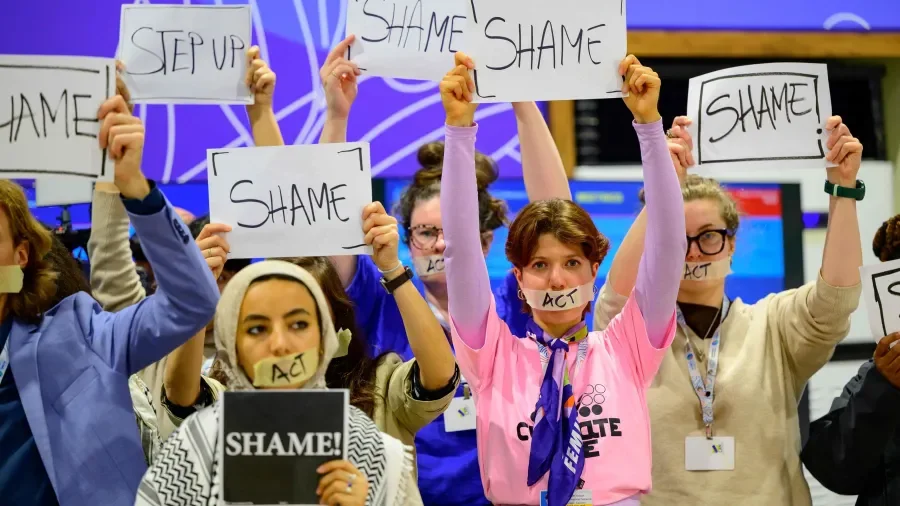
Photo: Yasin Akgul/AFP/Uol
The rejection was also expressed in writing. CAN labelled COP31 as the worst COP ever. The WGC called on the Parties to reject the omnibus decision, noting that this was supposed to be the COP of implementation and that human rights and gender equality were being treated as bargaining chips. A letter from 100 civil society groups, sent on November 21 to Turkey and Australia, had already warned that the presidency was heading toward one of the most disappointing COPs in UN history.
The Antalya COP shows that civil society continues to make its presence felt at climate conferences, seeking to place the most vulnerable people at the center of decision-making and exerting political pressure on the process. The direct effects of these efforts are still hard to measure, but demands for funding and data will likely continue to guide civil society’s participation through COP32.
An urgent crisis, insufficient responses
The UN Secretary-General summed it up well:
“There may be no consensus in the negotiating room. There is no ambiguity in the science.”
The failure weighs more heavily because of the timing. In 2026, the planet is experiencing what may be the strongest El Niño in living memory—perhaps even in the last thousand years. While negotiators debated in Antalya, November 20, 2026, recorded a temperature 2.12 °C above the pre-industrial average—the most extreme outlier ever measured. Projections indicate that 2026 will end at 1.52 °C above the pre-industrial period and that 2027 could reach 1.74 °C.
In August, Nepal demonstrated how these numbers translate into lost lives. The partial collapse of a glacier in Langtang National Park in the Himalayas triggered a torrent of water, ice, rock, and sediment that left approximately 1,500 dead and more than 5,000 missing. Even so, Nepal's mountain agenda in Antalya made no progress: the Nepalese delegation was painfully informed that the Subsidiary Bodies in Bonn would address the issue in June 2027 and June 2028.
As usual, funding failed to keep pace with the urgency. Marshall Islands President Hilda Heine pointed out the contradiction: they say there is no money, yet spending on wars is rising while the greatest threat to security remains underfunded. And the Pacific Resilience Mechanism received zero new funding, in the very year that was supposed to be the “Pacific COP.”
With no agreement reached, they postponed the decision until June 2027. For young people, the ACE is the most painful loss: governments failed to approve a five-year plan to strengthen climate education, access to information, and youth participation in decision-making. No wonder YOUNGO (the UNFCCC’s official youth constituency) speaks of a crisis of intergenerational justice. The Global Stocktake (GST2) has also been postponed: if the IPCC reports are delayed, the stocktake—meant to guide the next round of national targets—may be released without its key scientific input.
Antalya has reignited an old debate: if a single voice can bring everything to a halt, how does the UNFCCC move forward? But we need to be honest about the other side of the coin. This time, consensus allowed the most vulnerable countries to block a weak text. As Catherine Abreu noted, rejecting that text protected the commitments already agreed upon in the Convention and the Paris Agreement. A fair reform must accelerate action without taking away the most vulnerable countries’ power to say “no” to setbacks.
Meanwhile, action is moving forward through other channels. Following the first conference on the transition away from fossil fuels in Santa Marta, Tuvalu and Ireland will host a second edition in April 2027. But coalitions of willing countries are no substitute for the COP. It remains the only forum where civil society, indigenous peoples, heads of state, and people of all generations sit together in the same place, and without this pluralism, the impasse would be total. At the same time, this forum is unequal: civil society is largely excluded from the rooms where the text is decided, and states and corporations still hold the real power. And as LACLIMA warns, voluntary commitments are no substitute for the obligations of the Paris Agreement.
Next stop: Addis Ababa
COP32 will take place in Addis Ababa, Ethiopia, from November 8 to 19, 2027, and will be the first climate summit hosted in Africa in five years, with the Ethiopian presidency acting on behalf of the African Union. The president-designate, Foreign Minister Gedion Timothewos, has proposed three priorities: restoring hope, rebuilding trust, and mobilizing collective action. He also highlighted the Ethiopian philosophy of Medemer (“to add,” “to unite”). After Antalya, this promise will be the true test.
Wangari Maathai showed that planting trees could be a political act: through the Green Belt Movement, she mobilized Kenyan women and helped plant more than 51 million trees in the country. Today, Vanessa Nakate is expanding this legacy by linking climate justice to education: her sustainable schools project has already installed 39 solar energy systems and clean-cooking stoves in Ugandan schools, benefiting approximately 13,000 children. They show that responses to the climate crisis come from communities, movements, and civil society networks already doing the work on the ground—often long before governments do.
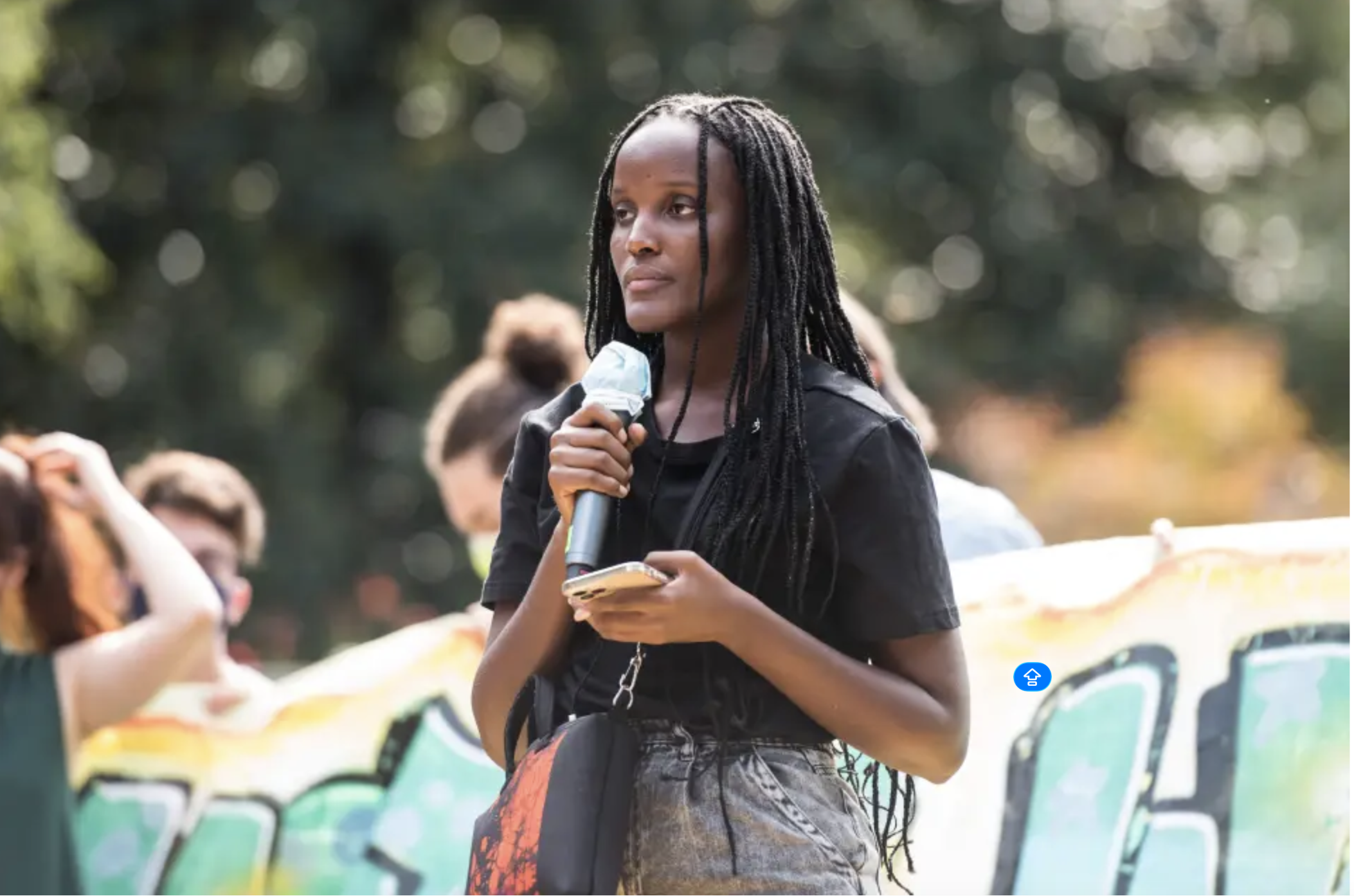
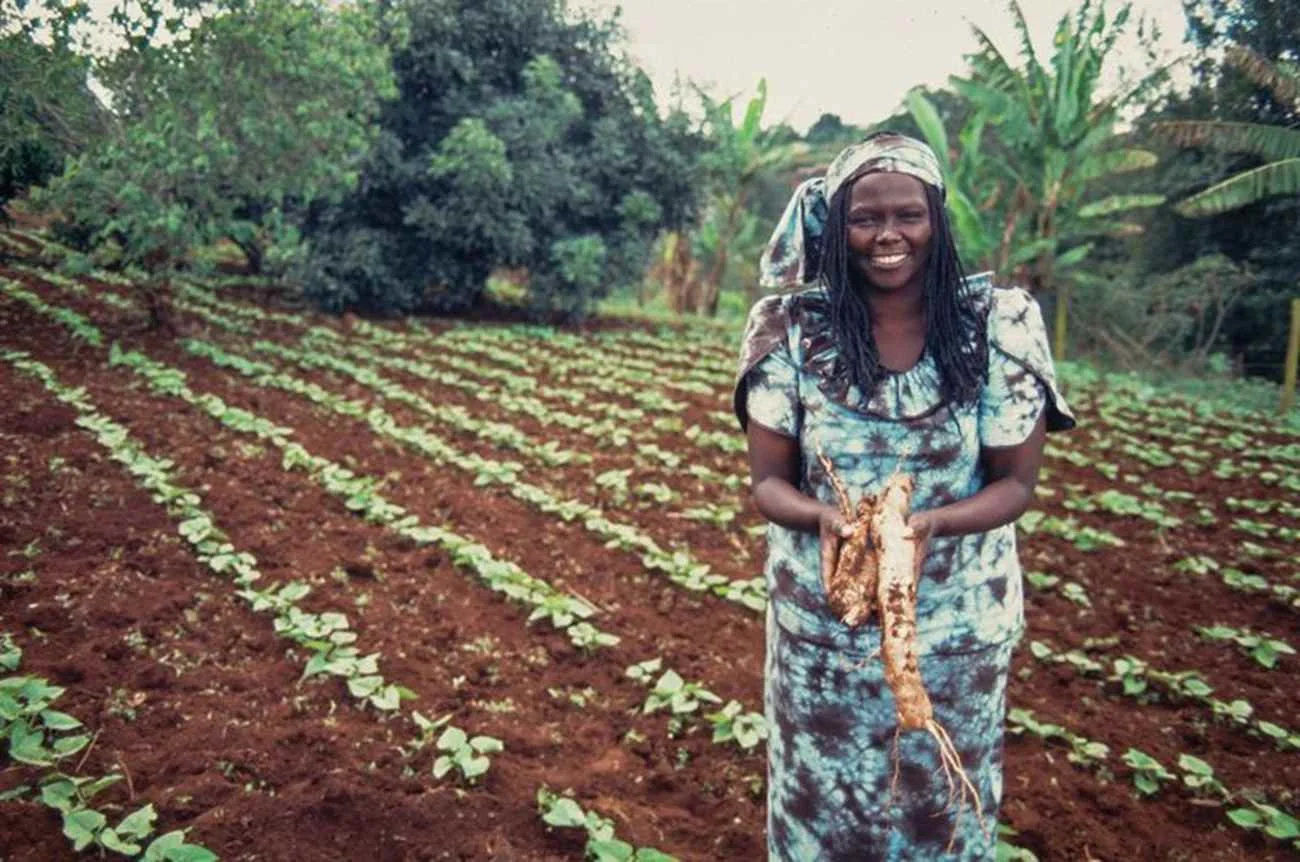
Picture 1: Reproduced from the Combate Racismo Ambiental website (Article by Sucena Shkrada Resk, 2018). Picture 2: Elena Di Vincenzo/Mondadori Portfolio
From Belém to Addis Ababa, two COPs in the Global South are paving the way for a bridge between Latin America and Africa—regions that share similar challenges and the urgent need for a transition that leaves no one behind. Inspired by these events, we hope that COP 32 will be the forum to more forcefully hold multilateralism accountable, and that women, young people, and civil society will have real power to influence decisions.